Utensora · Buyer resources
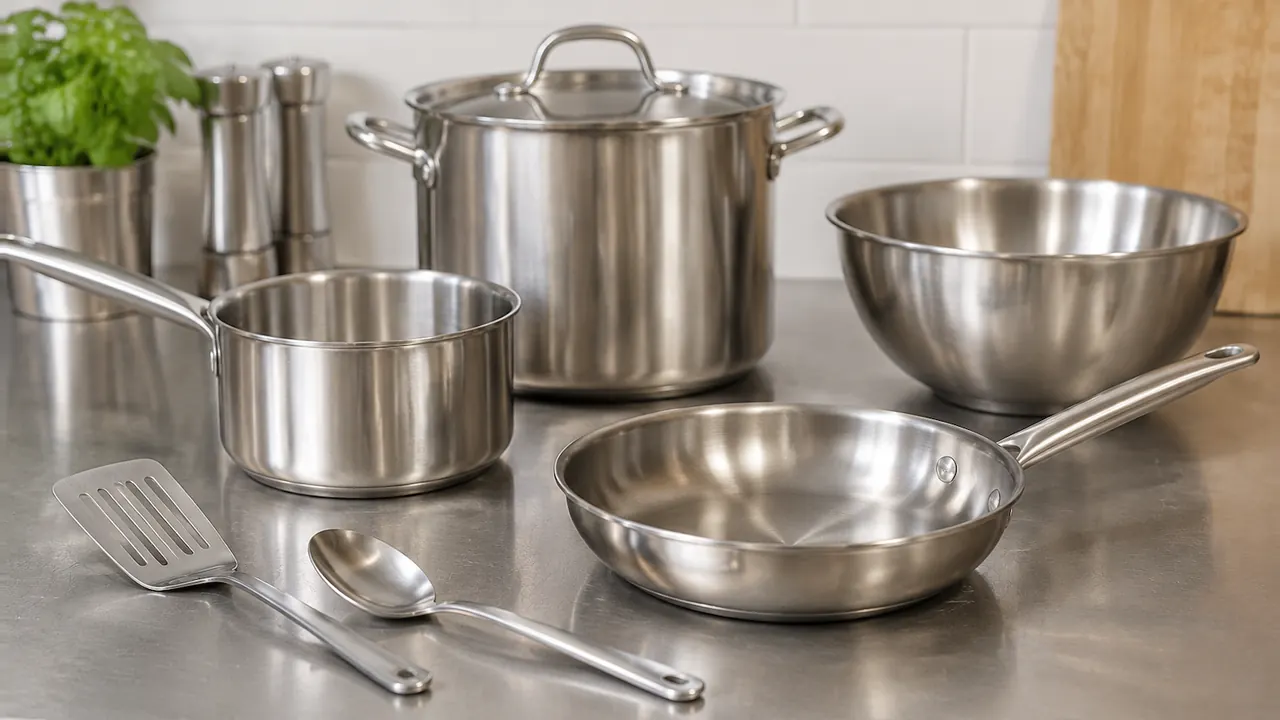
A magnet is a limited test
Buyers often use a small magnet to guess whether a pot is “real stainless” or whether it will work on induction. That test can be informative, but it is easy to misread. Some stainless grades are weakly magnetic or become more magnetic after forming and work-hardening. A magnetic response at the base may come from a conductive or induction plate rather than from the interior wall. Conversely, a pot that barely attracts a magnet is not automatically a higher or lower grade. Use the magnet as a first check, then confirm grade and induction use in writing.
Why the base and the wall can disagree
Many commercial pans are built with a layered base so they heat more evenly or couple with an induction hob. The side wall may behave differently from the bottom when you apply a magnet. That is a construction feature, not necessarily a defect. If you are checking samples, test the interior wall, the exterior wall, and the base, and note the results by location. If induction use matters, the base is the point that must couple with the hob.
What to record on a sample
Write down whether the sample is intended for induction, the stated grade, and what the magnet did at each location. If several sizes are in the order, check more than one, because bases can differ across a range. A photograph of the base construction, if the rim of the disk is visible, can help purchasing later. None of this replaces a specification; it simply stops a single magnet test from being over-interpreted.
Ask for induction and grade separately
In the RFQ, state whether induction use is required and which grade you want. Those are two different questions. Utensora can confirm both against the items you list. Include sizes and destination at info@utensora.com or WhatsApp +86 13751663289.
This guide is general purchasing guidance. Product suitability and order terms must be confirmed for your specification.
← All buyer guides