Utensora · Buyer resources
The preference is usually practical
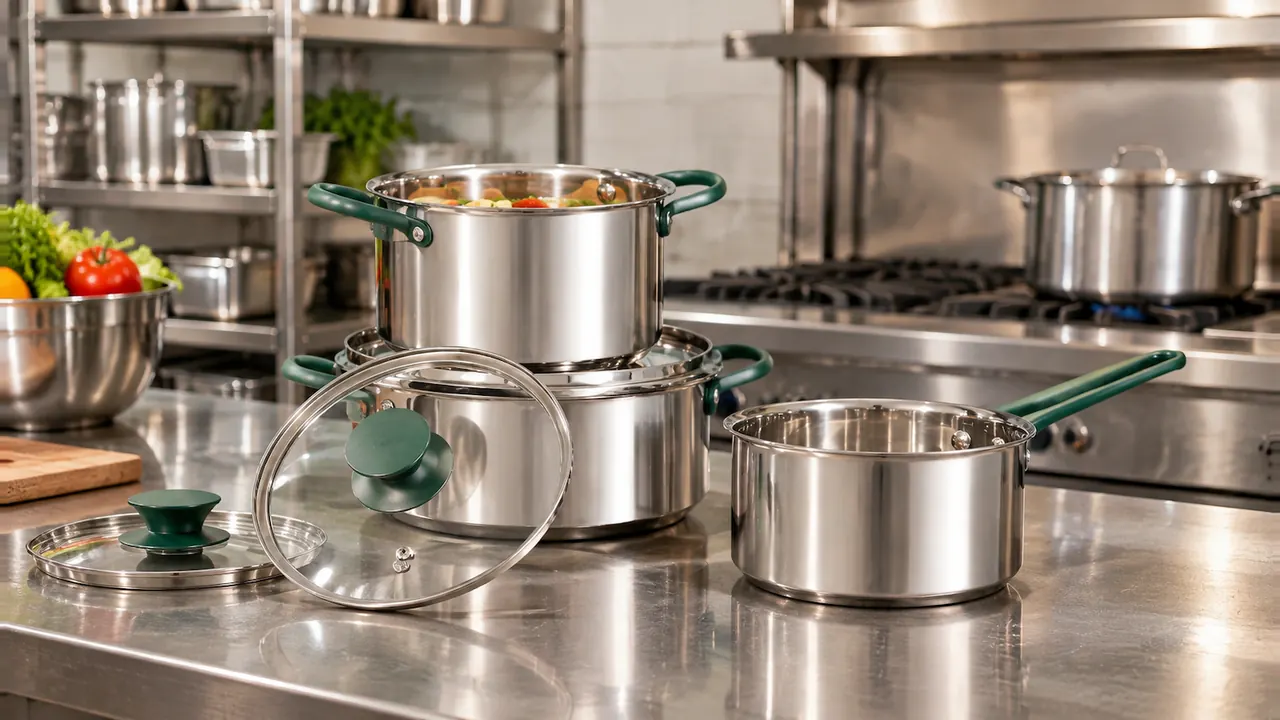
Many chefs keep stainless pots at the center of the line because the vessels can take direct heat, be deglazed, go through a commercial wash, and return to service without a coating to protect. Stocks, soups, pasta water, and many sauces are everyday examples. The preference is not a rule that every chef avoids every other material. It is a working habit built around durability and control. When a kitchen writes a purchase list, those habits should be translated into sizes, lids, and construction, not into advertising language.
What chefs notice in daily use
A pot that sits flat, pours or lifts safely, and has a lid that fits will be used; a pot that wobbles or scalds a hand will be pushed to the back. Handles, rim finish, and weight when full matter as much as appearance. Stainless can discolor and can stick if mishandled, so a chef who likes the material still expects the brigade to preheat, oil, and clean properly. Spare lids and a second pot in the most used size often matter more than a rarely used specialty shape.
Buying as if the chef will still be there in a year
Hotel and restaurant purchasers should ask the kitchen which sizes actually leave the shelf. Replacing a worn favorite diameter is better than filling a storeroom with unused volumes. Record the approved specification so a later buyer can order the same pot. If the chef also wants a few coated pans for delicate work, add them as their own lines rather than forcing stainless to imitate a non-stick surface.
Let the kitchen list the work
A short note of dishes and batch sizes is the best starting brief. Utensora can discuss stainless pots and pans against that note. Contact info@utensora.com or WhatsApp +86 13751663289.
This guide is general purchasing guidance. Product suitability and order terms must be confirmed for your specification.
← All buyer guides