Utensora · Buyer resources
Define what the label must say
Prepare brand artwork, item code, material description, size information, and the required languages. Confirm destination-specific wording with your importer. Labels for Middle East and South America shipments often need more than one language; that should be stated at the start. Do not add a certification mark, a standards logo, or a performance claim unless you have permission and supporting documentation. The quotation should repeat the label languages and the information that will appear, so artwork and production are not working from different lists.
Approve placement as well as artwork
Label supply and label application are different services. Mark the intended position and orientation on a drawing or a sample photo — lid, body, or hanging tag. Discuss the surface finish, because a label that adheres well to a brushed wall may behave differently on a mirror finish or a curved lid. If the label must be removable, say so. If some markets need a different sticker, treat them as versions rather than mixing them in one carton unless that mix has been agreed.
Connect packing to the shipment
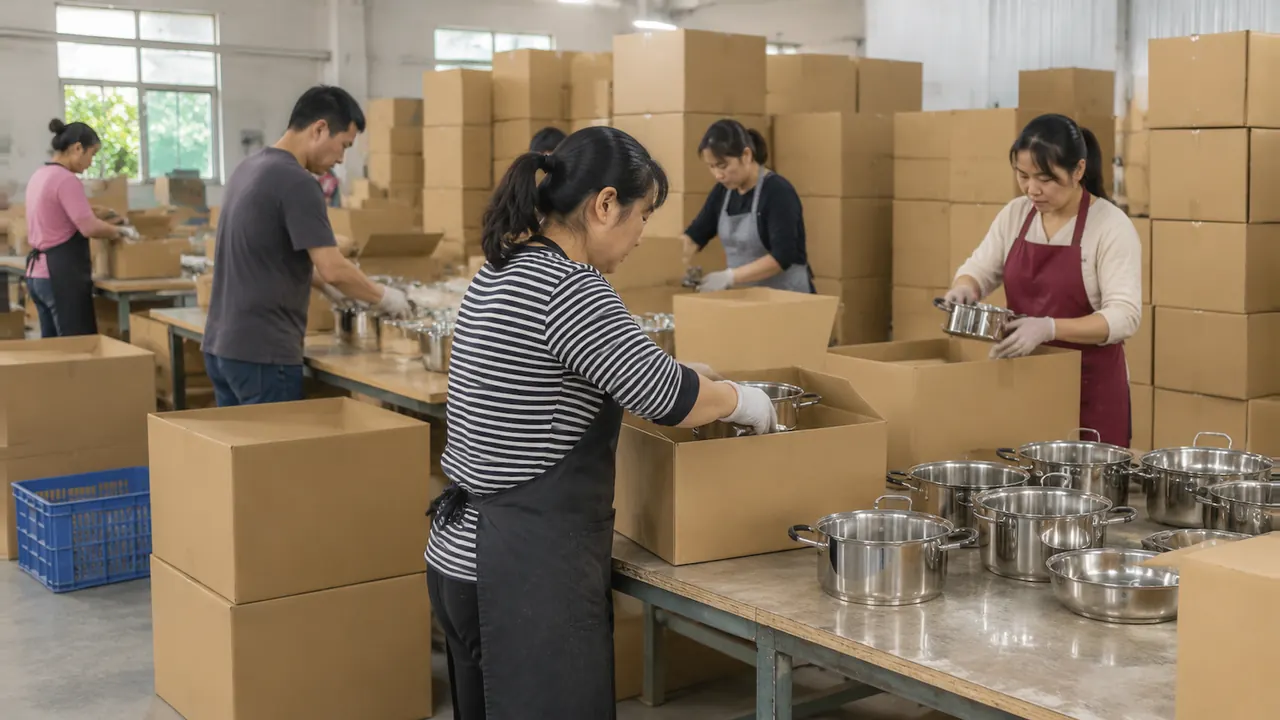
State whether you need neutral packing, customer-brand cartons, inner boxes, or color boxes. Provide carton marks, the desired product mix, and any drop-test or moisture concerns for the route. Ask for the packing arrangement to be included in the quote and checked again when the specification is approved. A well-specified pot in a weak carton is still a problem at the port. Outer marks should help the warehouse identify size and item without opening every box.
Include artwork and packing in the first RFQ
Attach reference files if you have them, plus destination and quantities. Utensora can discuss OEM labels, application, and export cartons as part of a cookware inquiry. Contact info@utensora.com or WhatsApp +86 13751663289.
This guide is general purchasing guidance. Product suitability and order terms must be confirmed for your specification.
← All buyer guides