Utensora · Buyer resources
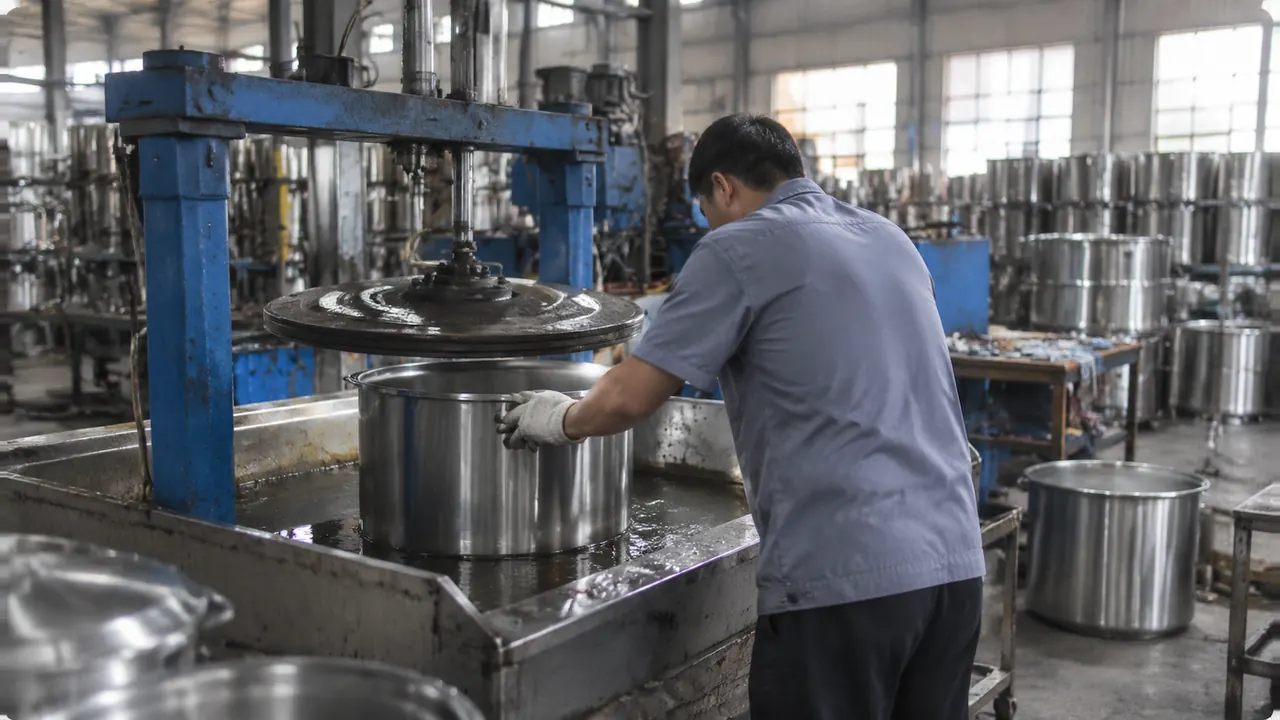
Leaks are a specification issue, not only a complaint
Large pots and soup barrels hold a lot of liquid. A seam, a faucet joint, or a lid that does not sit true can waste product and create a safety problem on a busy floor. It is reasonable to ask how vessels are checked before shipment, especially on faucet barrels and heavy stock pots. You do not need to prescribe a single machine or to accept a dramatic quality slogan. You need a plain description of the check, and a sample that you can also fill and inspect.
What to ask in the RFQ
Ask whether bodies are filled or otherwise checked for leaks, how faucet assemblies are tested, and what happens if a leak is found. If you will inspect before shipment, say whether you or a nominated inspector will look at a sample from the order. Photographs of the faucet area and the bottom seam on the approval sample help later comparisons. None of this is a promise of a particular test bench; it is a request that the work be described and then followed.
What receiving can still do
On arrival, spot-check a few vessels with water, including the tap if there is one, before the goods go into the kitchen. Check carton damage around faucets. If a leak appears later in service, record whether it is at the body, the weld, or the fitting, so the next order can be more precise. Spare fittings, if you buy them, should be stored with the item code.
Mention barrels and fittings on the inquiry
If your list includes faucet barrels or other fitted vessels, ask for the leak-check method to be noted on the quote. Utensora can discuss that request against a specific list. Contact info@utensora.com or WhatsApp +86 13751663289.
This guide is general purchasing guidance. Product suitability and order terms must be confirmed for your specification.
← All buyer guides