Utensora · Buyer resources
Induction needs a magnetic base
An induction hob heats a vessel by coupling with a magnetic metal in the base. Many stainless pans are made induction-ready by using a magnetic layer or encapsulating a suitable plate in the bottom. A pan that works well on gas is not automatically suitable for induction. A simple magnet test on the base is a practical first check, but it should be followed by a written confirmation for the sizes you intend to buy. The shape of the base also matters: a warped or very rounded bottom will not sit well on a flat induction zone.
Using induction-ready pans on gas
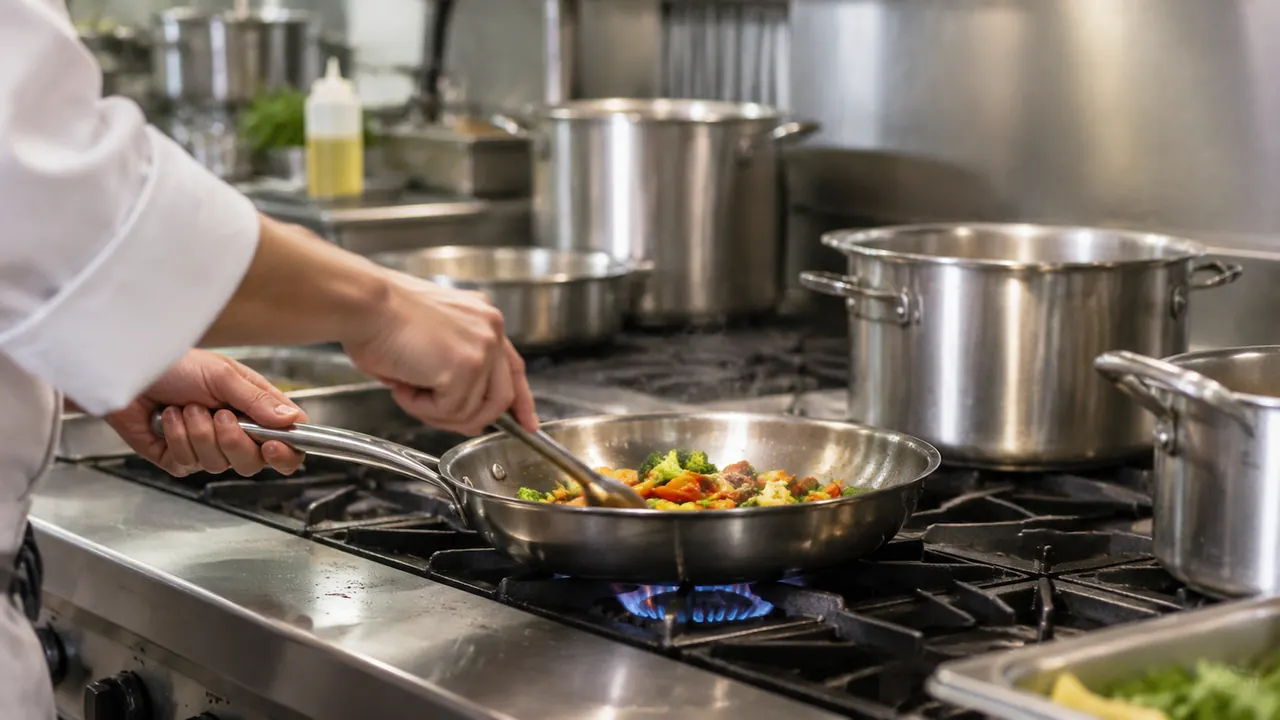
In many cases, a pan built for induction can also be used on a gas burner, because the cooking surface is still a metal pot. That does not mean every induction pan is the best choice for every gas range. Check that the base diameter suits the burner, that flames are not licking around handles, and that the vessel is stable. If a kitchen is converting from gas to induction, or running both, say so in the RFQ so the same specification can be assessed for both heat sources. Do not assume a glass-lid, plastic handle, or coated item is safe for every hob and oven combination.
What to trial in the kitchen
If possible, test a sample on the actual hob: start-up time, noise, whether the pan is detected reliably, and whether the base stays flat after heating and cooling. Large stock pots and tall barrels can be more demanding than a frying pan because of base size and fill weight. Confirm the maximum vessel diameter your hobs will accept. Handles should remain usable when the pan is full.
State every heat source in the brief
List gas, induction, electric, or mixed use, and the main pot sizes. Utensora can discuss stainless pots and pans against that heat-source note. Include the destination and quantities when you contact info@utensora.com or WhatsApp +86 13751663289.
This guide is general purchasing guidance. Product suitability and order terms must be confirmed for your specification.
← All buyer guides