Utensora · Buyer resources
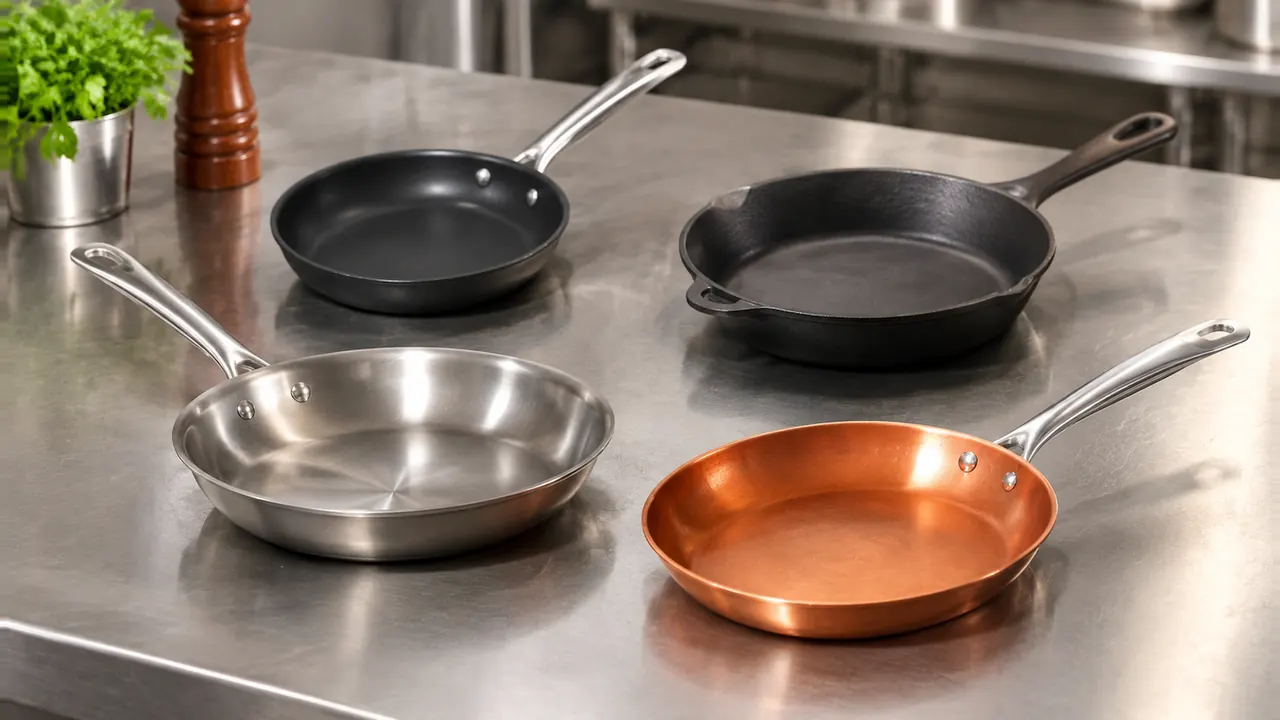
Match the pan to the work
A frying pan on a hotel breakfast station does different work from a pan used for reductions or for high-heat searing. Start with the menu, the portion rhythm, and the hob. Diameter, side-wall height, and weight all change how the pan is handled during a busy service. A pan that is too light may warp; a pan that is too heavy may be slow to maneuver. If several diameters are needed, list them by station rather than ordering one “average” size.
Construction and heat source
Decide whether you need a disk-bottom pan, a clad construction, or a simpler stainless body, and say whether the pan must work on induction, gas, or both. The base should sit flat. If a non-stick interior is required, treat the coating as a separate decision with care limits and a replacement plan. Uncoated stainless pans reward correct preheating and oil use, and they can be more straightforward to maintain in a hard pot wash. Confirm oven use only if the handle and any lid are also suitable.
Handles, lids, and balance
A commercial handle should stay secure, clear the neighboring burner, and remain comfortable with a full pan. Riveted or welded attachments should be inspected on the sample. Helper handles on larger diameters reduce wrist strain. Lids are not always required on frying pans, but if you want them, specify the fit and material. Look at how the pan stacks and whether the handle shape will crowd a shelf or a dish rack.
List diameters and heat sources
A short frying-pan list with diameters, construction preference, and quantities is enough to start a quote. Utensora can discuss stainless and other commercial frying pans against that list. Send it to info@utensora.com or WhatsApp +86 13751663289.
This guide is general purchasing guidance. Product suitability and order terms must be confirmed for your specification.
← All buyer guides