Utensora · Buyer resources
Polishing is a family of methods
Commercial stainless cookware may be mechanically polished or brushed, and some items may be electropolished or otherwise brightened. Mechanical polishing uses abrasives to cut and smooth the surface; brushed finishes leave a visible grain. Electropolishing is an electrochemical process that can reduce microscopic roughness and leave a cleaner-looking surface. Those are general descriptions of industry methods. A buyer does not need to accept a dramatic story about hidden dangers in ordinary polish in order to ask for a finish and approve it on a sample.
Approve what you can see and feel
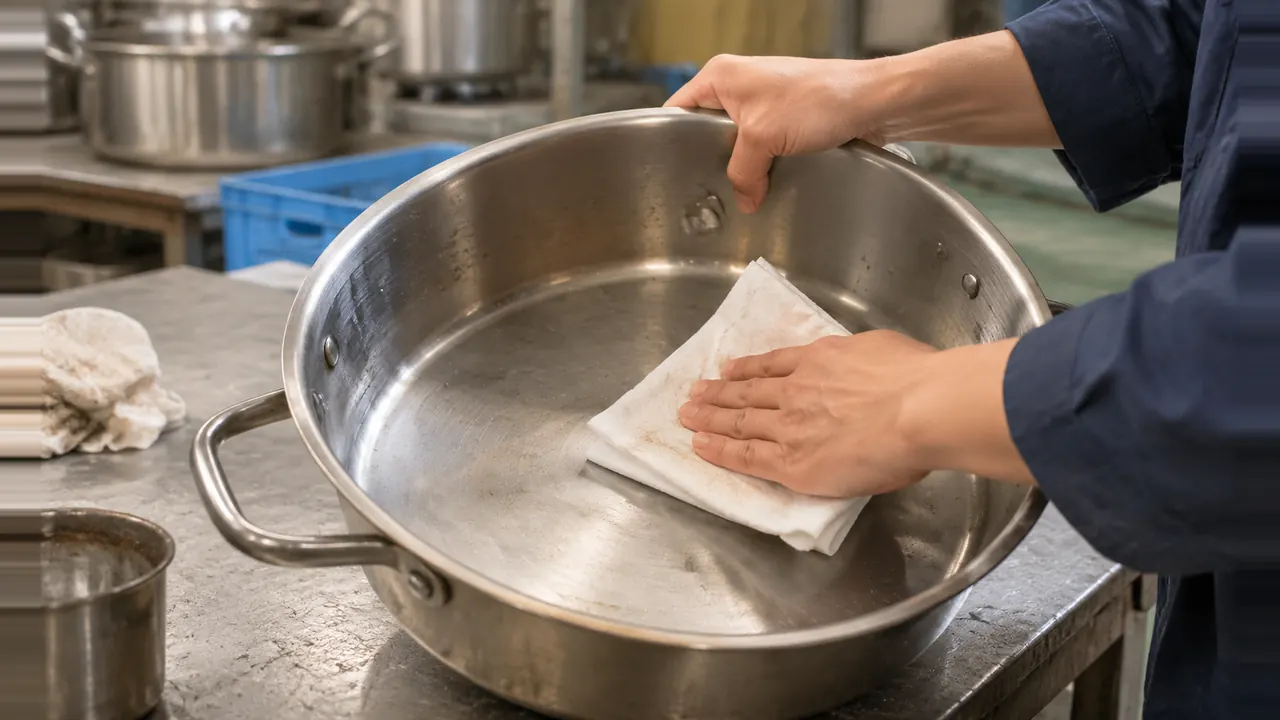
Look at the interior, weld transitions, and rim. Run a clean cloth around handle joints to check for leftover compound or sharp edges. If you need a very clean interior for hygiene-sensitive work, say so and compare samples rather than choosing a process name from a brochure. Ask whether the approved finish can be repeated across the sizes in the order. Two pots described as “polished” can still look different if the grit sequence or the final pass is not controlled.
Keep claims modest
A smoother surface can be easier to clean, but it does not replace washing, drying, and sensible storage. Do not treat any polish method as a medical or food-safety certificate. If documentation is required, it should refer to the goods and the destination rules, not to a general article about polishing. Record the approved appearance with a sample or a clear photograph attached to the order file.
State the finish you want to see
Describe a brushed, mirror, or other finish, or send a reference photo. Utensora can discuss cookware finishes as part of a normal specification. Write to info@utensora.com or WhatsApp +86 13751663289.
This guide is general purchasing guidance. Product suitability and order terms must be confirmed for your specification.
← All buyer guides