Utensora · Buyer resources
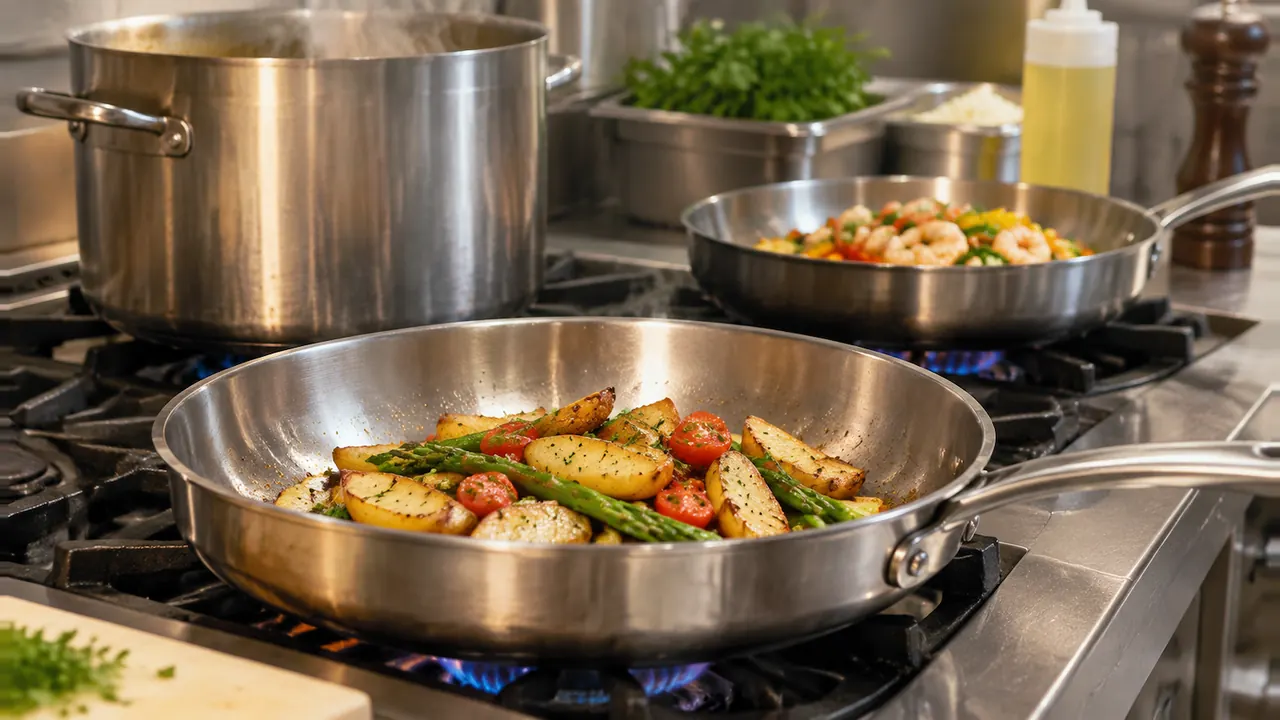
Different methods ask for different vessels
Stainless cookware covers a wide set of methods, but not every pot is equally suited to each one. Long boiling and simmering of stocks usually belong in a stock pot with a well-fitting lid. Searing and reduction often belong in a frying pan or sauté pan with a responsive base. Steaming belongs in a steamer pot or a pot with an insert. Holding and service may belong in a soup barrel rather than in the pot that did the cooking. Write the method next to the item on your list so the quotation can follow the work.
Heat control still matters
Stainless can take high heat, but empty preheating, oversized burners, and sugar-heavy foods can discolor the surface or cause sticking. For induction, confirm that the base couples with the hob and stays reasonably flat. For gas, check that flames do not wash the sidewalls and handles. Wet cooking methods such as boiling are generally forgiving; dry high-heat methods reward a flatter, more even base. If oven finishing is part of the method, confirm handles and lids as well as the body.
Think about the transfer, not only the cooking
In hotels and catering, food often moves from a cooking pot to a holding vessel, then to service. That transfer is where spills, heat loss, and extra handling appear. A lid, a pouring lip, or a faucet barrel may be more important than a small difference in diameter. Choose capacities with headroom so staff can move vessels safely.
Add the cooking method to each line
A brief that says “24–40 cm stock pots for stocks and pasta, steamer for vegetables, frying pans for the sauté station” is easier to quote than a bare size list. Utensora can discuss the mix against that description. Send it to info@utensora.com or WhatsApp +86 13751663289.
This guide is general purchasing guidance. Product suitability and order terms must be confirmed for your specification.
← All buyer guides