Utensora · Buyer resources
Name the job first
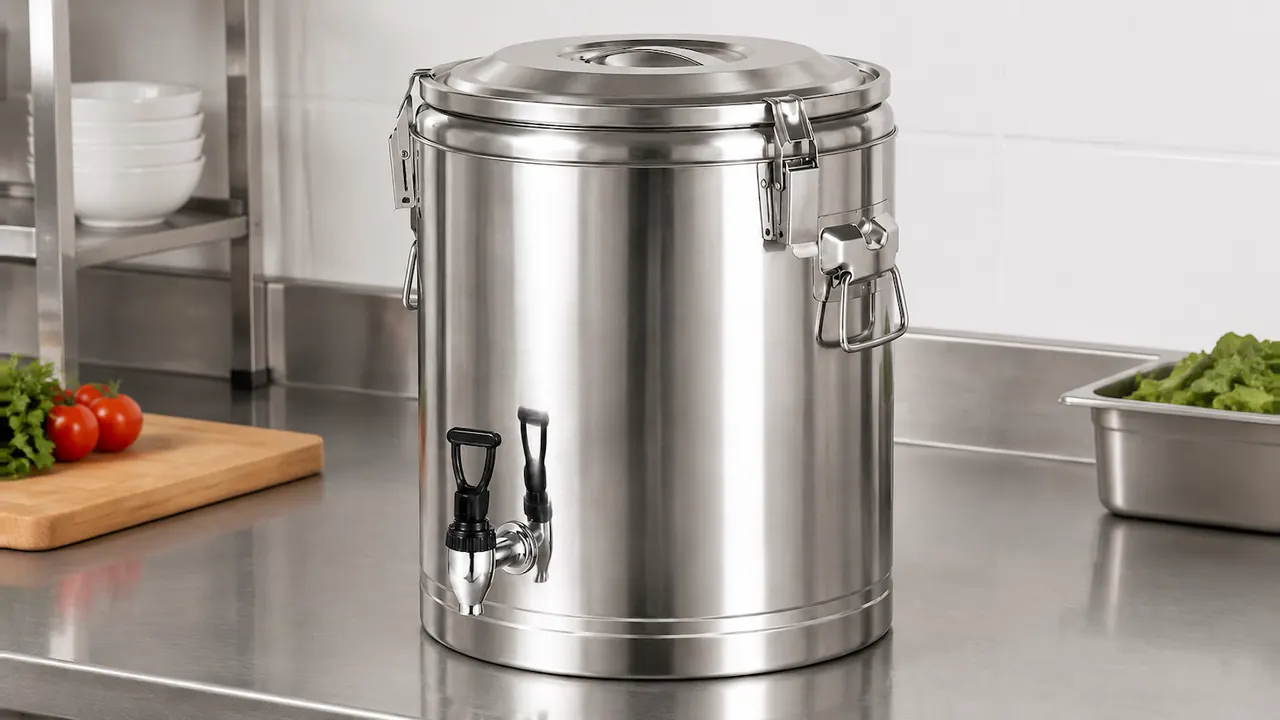
“Soup barrel” is a family, not a single product. A tall cooking barrel is used when the kitchen wants a high-sided vessel for preparing or reheating large volumes. An insulated barrel is aimed at holding temperature on a service line or during transport between kitchen and buffet. A faucet barrel is built so staff can portion from the vessel without ladling from the top every time. These jobs can overlap, but a quotation should say which form you mean. A size alone will not tell a supplier whether you need insulation, a tap, or a cooking pot with a tall wall.
What to check on each form
On a tall cooking barrel, look at base stability, handle strength, lid fit, and whether the height clears the range and the pot wash. On an insulated barrel, ask how the lid sits and how the vessel will be cleaned; holding performance should be discussed as a practical expectation, not as an absolute number invented for a brochure. On a faucet barrel, the tap, its seal, and how it is cleaned and leak-checked are part of the product. If a barrel will not go on direct heat, say so, so it is not quoted as a range pot by mistake.
A kitchen may need more than one type
Many hotels cook in one vessel and serve from another. Banquet teams may want faucet barrels for fast portioning, and insulated barrels for a long buffet. List each type with its own sizes and quantities. Packing should protect faucets and lids, which are easier to damage than a plain pot wall. Spare taps or lids, if required, should be written on the RFQ.
Specify type, then size
A short table with type, size, and quantity is enough to start. Utensora can discuss tall cooking, insulated, and faucet soup barrels against that table. Send it to info@utensora.com or WhatsApp +86 13751663289.
This guide is general purchasing guidance. Product suitability and order terms must be confirmed for your specification.
← All buyer guides