Utensora · Buyer resources
Start with the job, not the metal slogan
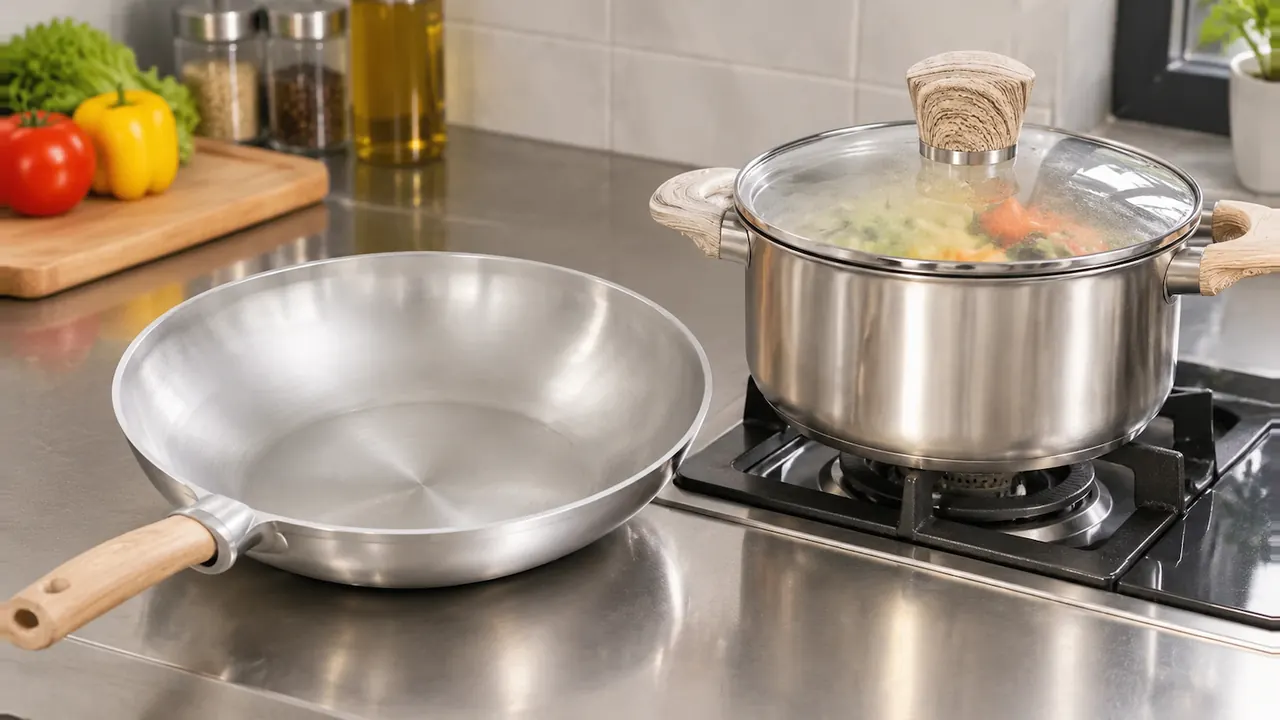
Aluminum and stainless steel both appear in commercial kitchens, but they are not interchangeable. Aluminum conducts heat quickly and is relatively light, which can help on a busy range when pans are moved often. Stainless steel is typically chosen for durability, a more stable appearance after frequent washing, and compatibility with a wider set of cleaning routines. The better choice depends on the station: a stock pot that simmers for hours, a sauté pan that is deglazed many times a service, and a vessel that is stacked in a pot wash have different stresses. When you request a quote, describe the cooking task and the heat source rather than asking only for a material name.
Heat behavior and construction
A thin aluminum pan can heat quickly but may also develop hot spots if the base is light. Many professional stainless pans use a clad or disk base that includes a conductive core so the cooking surface heats more evenly. That construction should be stated in the specification, because a single-layer stainless body and a bonded base do not perform the same way. For induction, the base must be able to couple with the hob; a magnet test on the base is a simple first check, but it is not a substitute for confirming induction use on the quote. Mixed kitchens that run gas and induction side by side should say so, so the same pan is not assumed to suit every range.
Cleaning, wear, and replacement
Hotel and restaurant pot washes are harder on cookware than a home sink. Stainless steel generally tolerates alkaline detergents, stacking, and repeated heating better than untreated aluminum, which can discolor, pit, or become dull. Coated aluminum can reduce sticking, but the coating is a wear item and should be treated as such in a replacement plan. Stainless vessels can discolor from heat or hard water; that is usually a maintenance issue rather than an immediate failure. Ask how lids and handles are attached, and whether replacements can be supplied, because those parts often fail before the body of a well-made pot.
What to put in the inquiry
List the vessels by station and size, then state a material preference where you have one. If you are still deciding, describe the menu, batch size, and whether the pot will also be used for holding or service. Mention the destination market so packing and labeling can be discussed with the product. Utensora can quote stainless stock pots, pans, and related commercial vessels against that brief. Send sizes, quantities, and the destination to info@utensora.com or WhatsApp +86 13751663289.
This guide is general purchasing guidance. Product suitability and order terms must be confirmed for your specification.
← All buyer guides